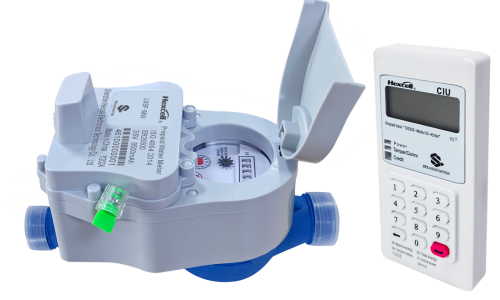
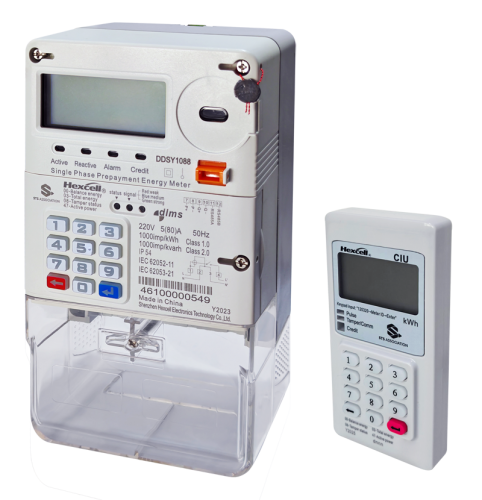
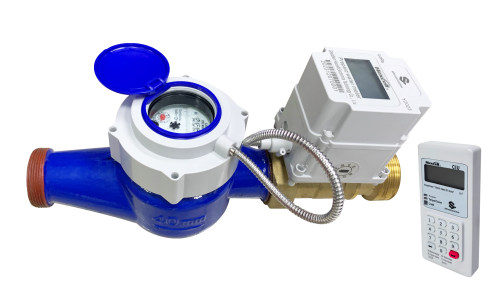
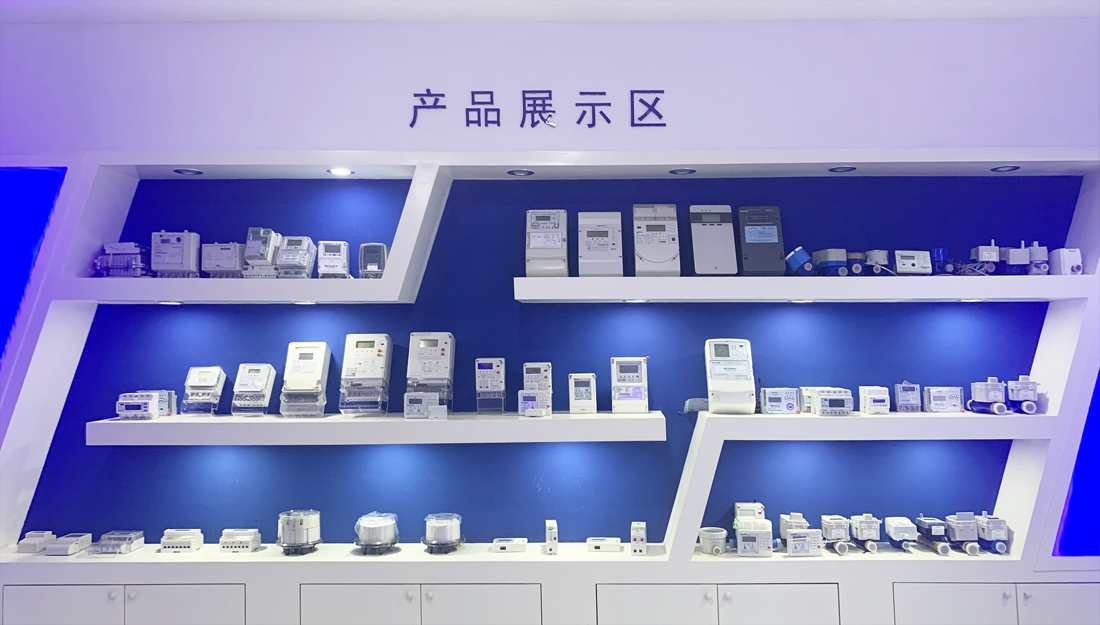
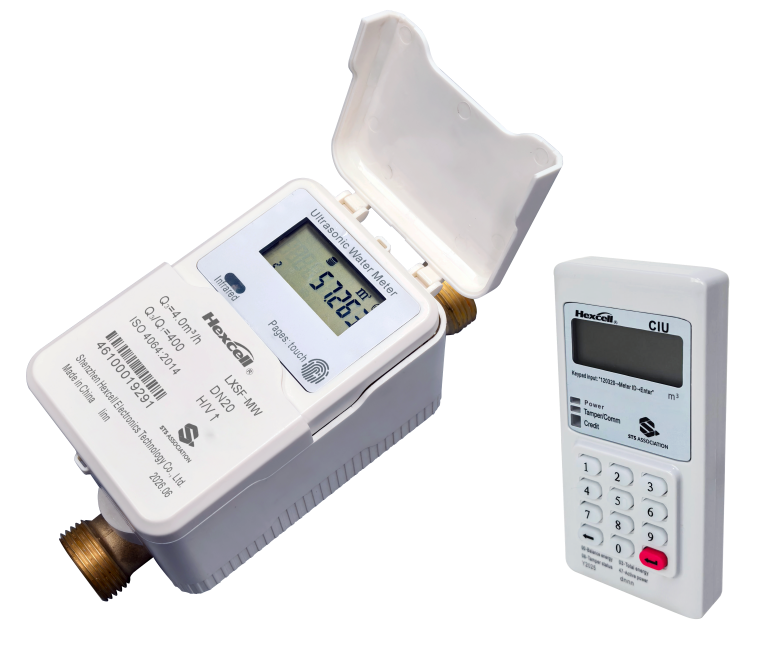
Submetering involves installing additional metering equipment downstream of the main meter to allocate energy consumption to different units, processes, or tenants. This technology is gaining popularity because it transforms energy consumption from a shared administrative cost into a separately accountable budget item, significantly improving user electricity behavior. Hexcell offers a range of submetering solutions suitable for various applications, from residential apartment buildings to large manufacturing plants, all based on the same principle of providing accurate and reliable data. Whether you want to reduce common area costs, enforce energy budgets for tenants, or simply understand the energy consumption of different departments, a well-designed submetering system is a crucial investment .
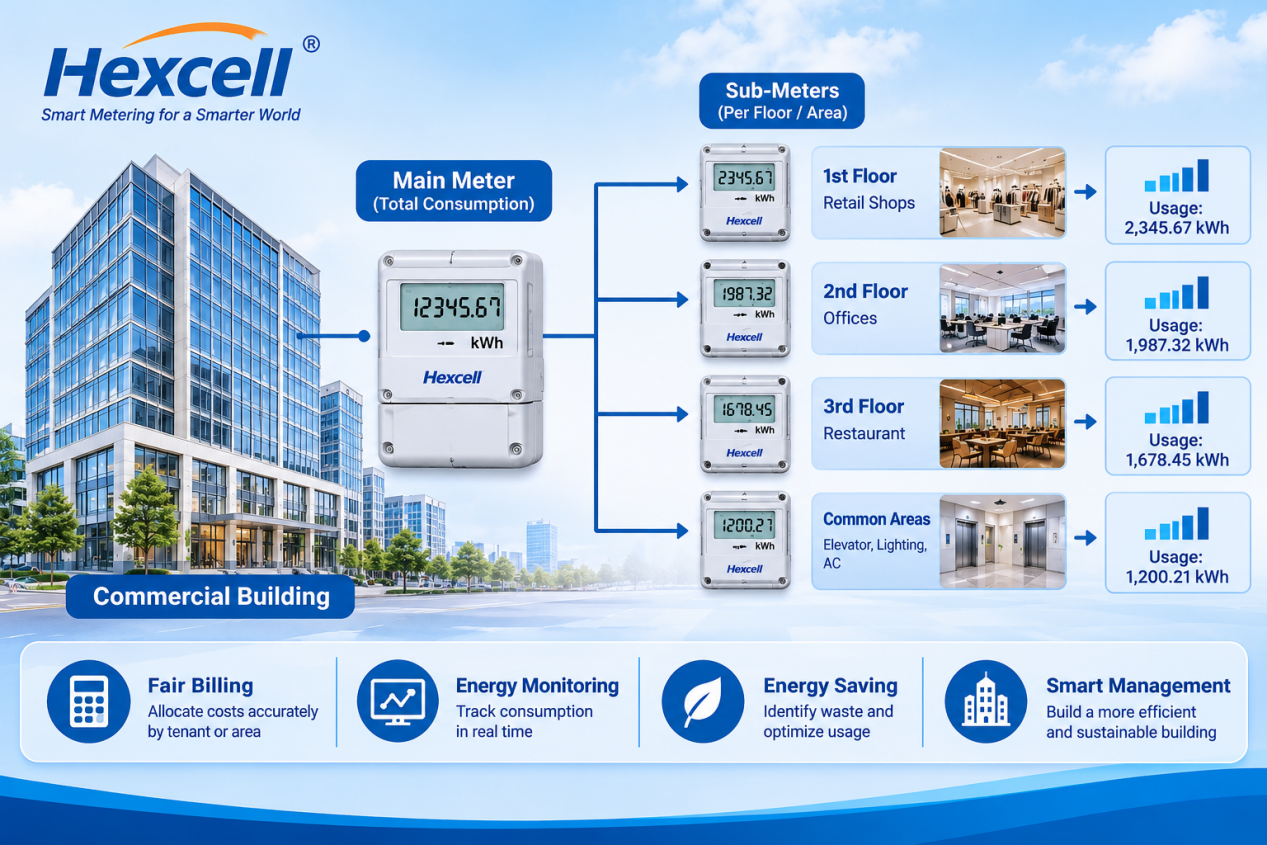
Schematic diagram of commercial building sub-measurement
Sub-metering for multi-tenant buildings
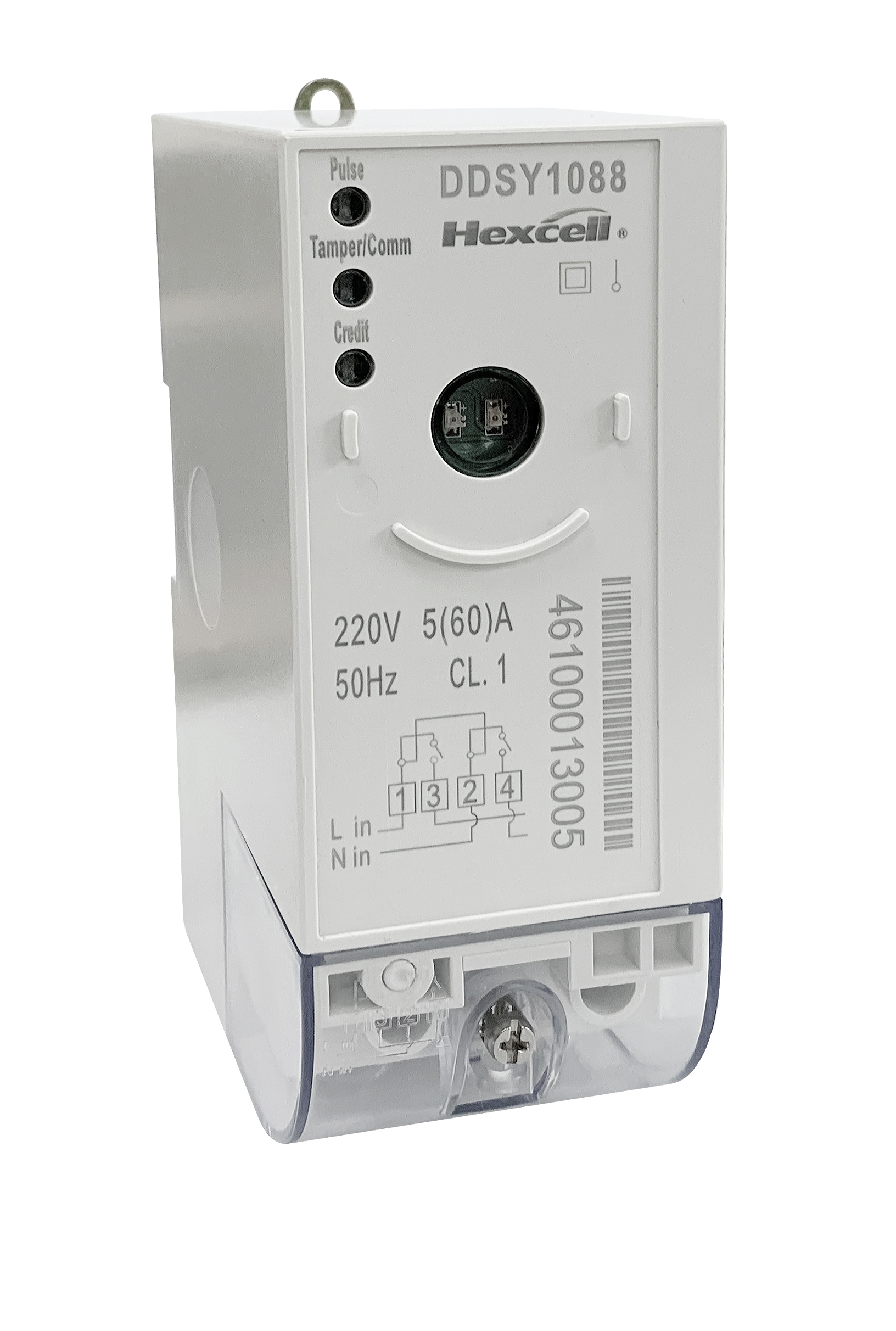
When an entire building shares a single electricity meter, it becomes nearly impossible to fairly allocate electricity costs among tenants, leading to disputes and excessive electricity consumption. Submetering addresses this issue by equipping each unit with an independent meter, allowing tenants to pay only for their actual usage, thus encouraging energy conservation and reducing the burden on landlords. Hexcell's compact and reliable meters can be installed in every apartment or commercial unit. If the project requires wireless functionality, models such as the DDSY1088 single-phase wireless smart meter or the DTSY1088 three-phase wireless rail meter transmit data without complex wiring. For property managers, the convenience of remote meter reading eliminates the hassle of manual inspections, reduces billing errors, and provides a real-time dashboard showing which units may be overheating or leaking. Furthermore, by implementing submetering, owners typically find a 10% to 20% reduction in total building electricity consumption, simply because tenants are more mindful of energy conservation after directly sharing the cost of their electricity.
Retrofitting projects using DIN rail mounted instruments
One of the biggest obstacles to energy monitoring in existing buildings is the widespread perception that installing meters in crowded distribution panels is both complex and costly. Hexcel solves this problem with a range of DIN rail-mounted meters that snap directly into standard rails, taking up minimal space and allowing for quick installation. These DIN rail meters can replace existing circuit breakers or be added as compact units without requiring a complete overhaul of the distribution panel, making retrofit projects exceptionally simple. Furthermore, these meters are available in both single-phase and three-phase configurations, suitable for virtually any residential or commercial setting. For industrial projects requiring multi-circuit monitoring, the DDSY1088-D multi-channel wireless meter can integrate up to 12 or more loads into a single device, significantly reducing wiring complexity and cost. By employing retrofittable DIN rail technology, Hexcel enables building owners to upgrade to smart metering systems without disrupting daily operations.
Real-time monitoring via RS485, Modbus, WiFi, 4G, and LoRa
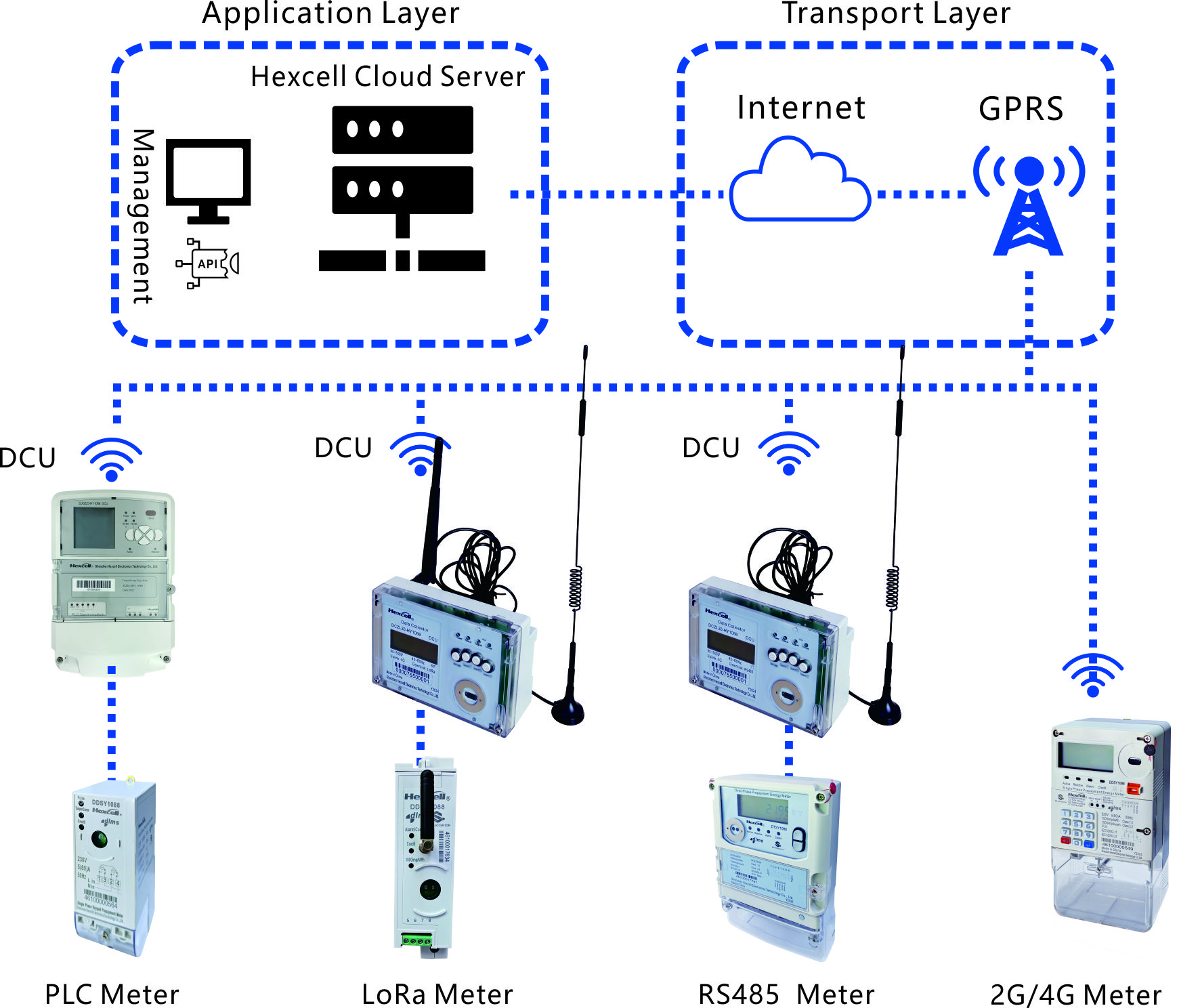
Data is only valuable when it's accessible, and Hexcell meters are designed with communication flexibility at their core. Whether you prefer traditional wired connections or convenient wireless networks, there's a Hexcell product to meet your infrastructure needs. RS485 and Modbus interfaces support reliable long-distance data transmission in industrial environments, while models with built-in WiFi or 4G connectivity can be easily deployed independently without an additional gateway. For large networks with low power consumption and wide coverage, LoRa technology is ideal, enabling thousands of meters to communicate over kilometers with minimal interference. These options allow you to integrate meter data into building management systems, cloud platforms, or custom software, enabling real-time alerts for anomalies, automatic report generation, and detailed analysis of energy consumption patterns. This high degree of interconnectivity is what distinguishes Hexcell meters from ordinary measuring devices and truly intelligent energy management tools.